 Italiano IT
 English EN
 Français FR


Production downtime is one of the main enemies of efficiency in manufacturing companies. Even a few minutes of inactivity can cause significant financial losses, jeopardise on-time delivery and undermine a company's competitiveness. In this context, the move towards the smart factory is no longer a strategic choice but a necessity.
In this article we look at the most common causes of production downtime, its economic and operational implications and, above all, how to prevent it by adopting Industry 4.0 software such as MES, WMS, Scheduler and Artificial Intelligence solutions.
What is production downtime?
Production downtime is an unplanned interruption of the production cycle, often caused by breakdowns, lack of materials, human error, planning inefficiencies or communication problems between departments.
In an increasingly competitive industrial environment, every unscheduled stoppage:
- brings direct costs (idle machines, idle labour),
- generates indirect costs (late deliveries, loss of customer trust),
- has a negative effect on OEE (Overall Equipment Effectiveness) figures.
The main causes of production downtime
- Machine breakdowns
Reactive maintenance (stepping in only when the problem appears) is still far too common. Without predictive systems, breakdowns come without warning.
- Planning errors
Poorly optimised planning upsets the balance of load on resources, creates operational overlaps and can trigger knock-on effects that slow down or block the entire production flow.
- Logistics problems
Missing or late material supplies cause interruptions. These problems are often linked to manual or non-integrated warehouse management. - Ineffective communication
In many companies, departments communicate through fragmented or unstructured channels, which slows down operational decisions.
The economic impact of production downtime according to Deloitte
According to a study by Deloitte, unplanned production downtime causes losses of up to 50 billion dollars a year worldwide. In addition, failing to adopt production optimisation systems can reduce a plant's production capacity by up to 20%. These figures show how crucial it is to adopt AI solutions and Industry 4.0 software for monitoring and managing plant, so as to keep operations flowing.
Source: Deloitte Insights – Using AI in Predictive Maintenance
Preventing production downtime with Industry 4.0 software and AI solutions
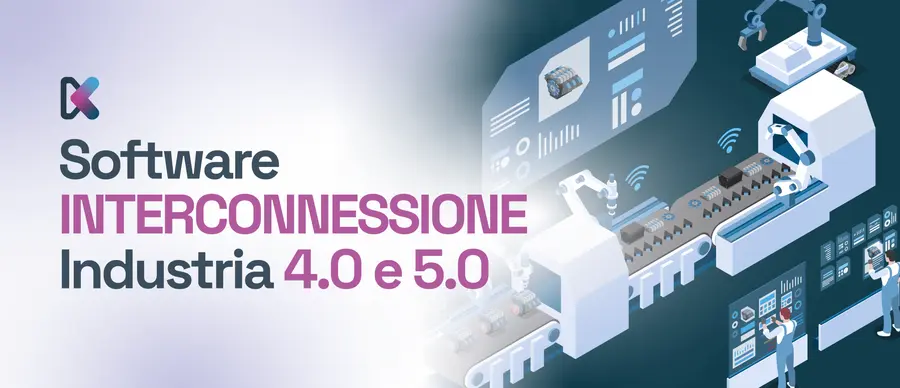
The move to Industry 4.0 has brought a step change in manufacturers' ability to monitor, predict and react in real time to operational risks. Integrating Industry 4.0 software and artificial intelligence solutions now makes it possible to prevent and avoid most production stoppages, thanks to:
- Continuous collection and analysis of production data, to pick up weak signals of imminent failures.
- Prediction of anomalies through AI models trained on production and maintenance history.
- Planning of decision flows, with schedulers that optimise planning and manage priorities automatically.
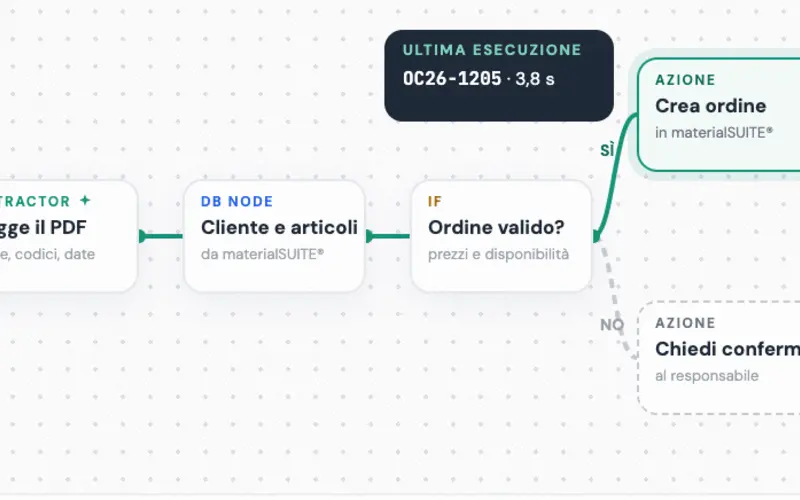
- Automation of information processes, improving communication between operators, managers and departments.
The result is production that is smoother, safer and more profitable, able to adapt dynamically even to the most complex scenarios.
Avoiding production downtime: Logikamente's solutions
MES – Manufacturing Execution System
MES is the software for real-time production monitoring. It continuously collects and analyses data on the progress of jobs, providing up-to-date, reliable information to the ERP system, so as to ensure full traceability, synchronisation between departments and efficient management of the production process.
SCH – Scheduler
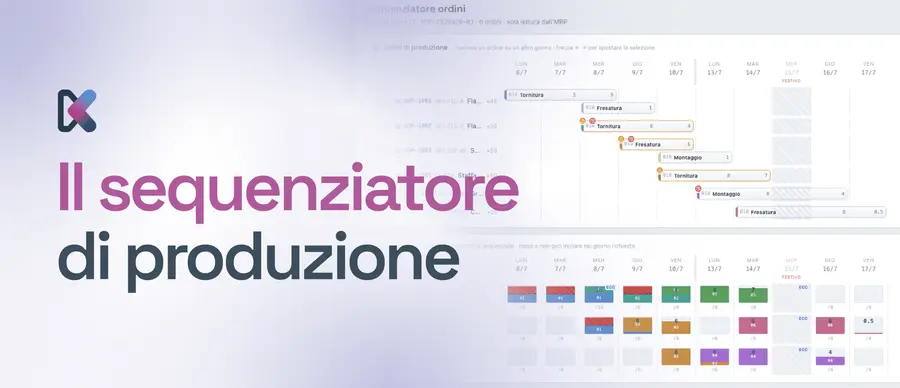
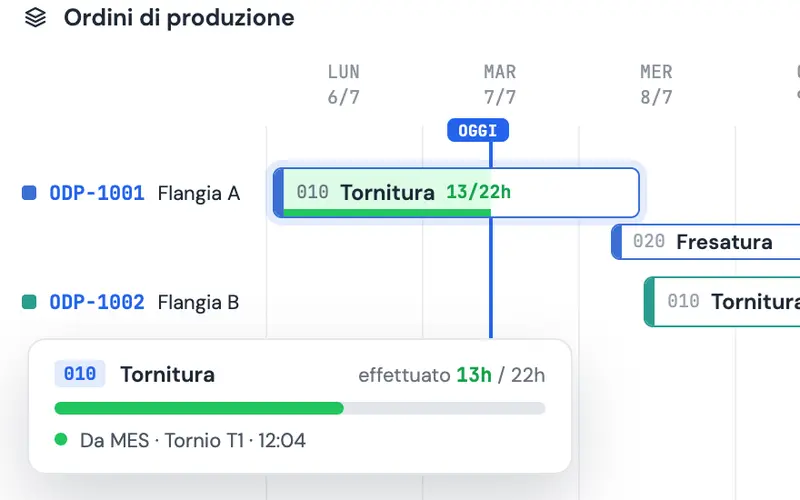
The production scheduler is the software that plans production activities optimally, taking into account the real capacity of machines, resources and times. It helps to prevent production downtime by reducing bottlenecks, idle time and overloads. For production managers this means greater efficiency, operational control and production continuity.
WMS – Warehouse Management System
The WMS (Warehouse Management System) is an advanced system for integrated warehouse management, providing real-time control of stock, locations and logistics flows. From a production flow point of view, the WMS minimises the risk of production downtime caused by unavailable materials, picking errors or inefficient line replenishment, ensuring precise synchronisation between logistics and production.
donia® – Artificial Intelligence
donia® is the generative AI chatbot agent designed to support factory operators during production processes. Thanks to data integration, donia® works across operations from production to the warehouse. donia® analyses warehouse data to predict stock-outs, monitors job progress detecting anomalies on the line, and analyses non-conformities in the production plan, proposing new scenarios.
Production downtime is a common problem for every company in the manufacturing sector. Understanding its causes, effects and the strategies to reduce it is essential to improving efficiency and competitiveness.
Find out how to reduce production downtime by optimising your processes: request a free demo now!

He is often the first person you meet when you get in touch with us. His job is to listen: to understand how the company works, where time is lost, and what the people on the shop floor and in the office need. From there he helps choose the digital tools that fit the process, without adding anything that isn't needed.