 Italiano IT
 English EN
 Français FR

In today's manufacturing environment, production processes can no longer be managed as static sequences of operations. In 2026 the complexity of supply chains, the variability of demand and the pressure on costs and efficiency call for an approach that is systemic, measurable and tightly integrated across production, planning and control.
For production managers, the goal is not to "produce more" but to produce better, reducing variability, bottlenecks and efficiency losses along the entire production flow.
What are production processes?
Production processes are the coordinated set of activities and operations needed to turn raw materials and resources into finished goods or services ready for the market.
A well-structured industrial process involves:
- information: data on orders, demand and production capacity
- technology: machines, control systems and software
- people: operators, technicians and managers who direct and monitor the work
- operations: all the activities carried out along the production line
The aim is to meet market demand efficiently, ensuring product quality and continuity of production.
The main types of production process
There are several ways a company can structure its production cycle.
The main ones are:
Make-to-order production
The product is made to measure for a specific customer, with low levels of repetition.
Batch production
A group of identical products is manufactured in the same production cycle.
Mass production
Large quantities of standardised products are made for stock, often with a high degree of automation.
Continuous production
The production process runs without interruption to minimise the cost of machine downtime.
The fundamental stages of a production process
Looking at production processes from a technical point of view, a few fundamental stages stand out, each with a high impact on overall performance.
1. Planning and scheduling
The quality of the production plan is the factor that determines:
- the real utilisation of resources
- whether delivery dates are met
- how far changeovers are reduced
Planning that is not aligned with the actual state of the shop floor creates systemic inefficiencies.
2. Execution and operational control
During execution, every deviation from standard times, every micro-stoppage and every piece of rework must be detected and put in context, not simply recorded.
3. Quality control
Effective quality control is not only a final check: it is built into the process, to catch drifts before they turn into structural scrap.
4. Internal logistics and material flows
Unnecessary handling and badly sized buffers are often responsible for longer lead times, higher indirect costs and a loss of visibility over order status.
Solutions for optimising production processes in 2026
Production processes cannot be optimised with isolated measures or initiatives. A truly effective approach requires a structured technical view, based on analysis of constraints, measurement of actual performance and integration between planning and execution.
Digitalising production with MES software
Introducing MES software enables continuous, detailed monitoring of production processes, helping to reduce scrap, rework and unplanned plant downtime. Real-time monitoring of process variables, combined with end-to-end traceability of production activities, makes it possible to identify operational anomalies, process drifts and recurring inefficiencies quickly.
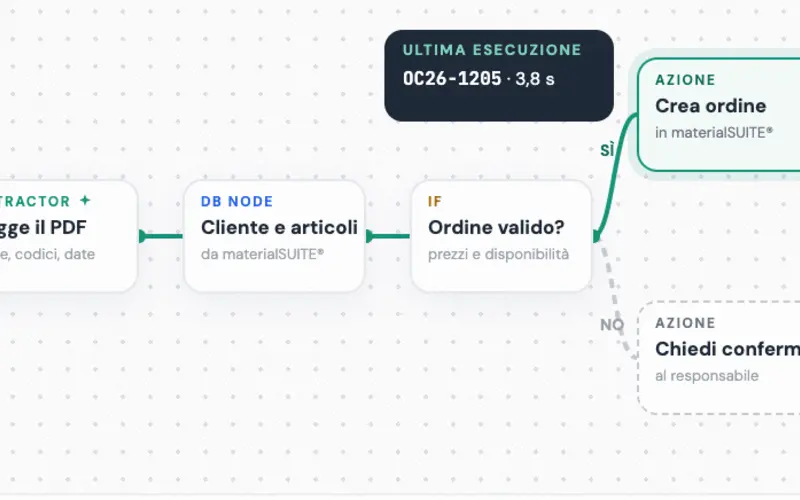
Native integration between MES and ERP keeps planning consistent with the actual progress of production processes, improving the use of resources and the management of materials.
Industry 4.0 machines and production KPIs
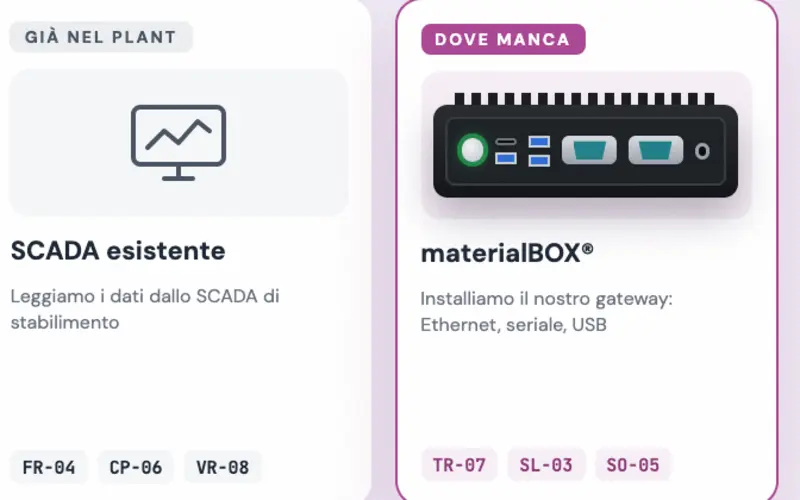
Integrating interconnected Industry 4.0 machines with production management systems allows a structured analysis of production processes through continuous monitoring of the main KPIs generated directly by production assets, including OEE.
Overall Equipment Effectiveness is a technical performance indicator used to assess the overall effectiveness of a machine, line or plant against its theoretical potential, taking into account all the operational losses that occur during planned production time. This approach makes it possible to correlate the performance of individual resources with the overall efficiency of production processes, supporting decisions based on objective, timely data.
AI agents for the manufacturing industry
donia® is an AI Twin: a software solution based on generative AI, designed to support factory operators and production managers in their day-to-day operational decisions.
Because it integrates company data, donia® can be deployed directly in plant activities, automating and speeding up the collection of information from the various software systems involved in optimising production processes.
This integration provides structured reports, dashboards and real-time data on production management, the warehouse, operational planning and the maintenance status of production assets.
The result is continuous monitoring of production processes and a concrete improvement in overall operational efficiency.
Want to find out how to transform your production processes?

He is often the first person you meet when you get in touch with us. His job is to listen: to understand how the company works, where time is lost, and what the people on the shop floor and in the office need. From there he helps choose the digital tools that fit the process, without adding anything that isn't needed.